




Panama Canal Drought
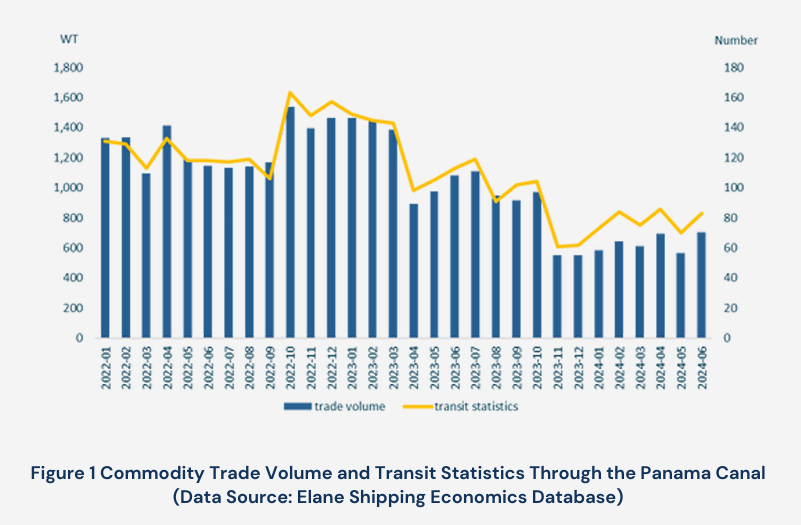
The drought in the Panama Canal has led to a sharp drop in traffic in the first half of the year. Official statistics show that as of April, the number of ships passing through the Panama Canal fell to 739 from 1,026 last year, with only 692 ships recorded in February. According to the Elane Shipping Database, since December 2023, after the Panama Canal area entered the dry season, the number of ships of bulk commodities passing through the Canal decreased significantly. In the first half of 2024, the average value of monthly trade volume decreased by 47.5% compared to the same period of the previous year, and the average number of monthly passing ships decreased by 37.5%. At present, the rainy season has come earlier in the Panama Canal, therefore the drought has been alleviated.
Red Sea Crisis
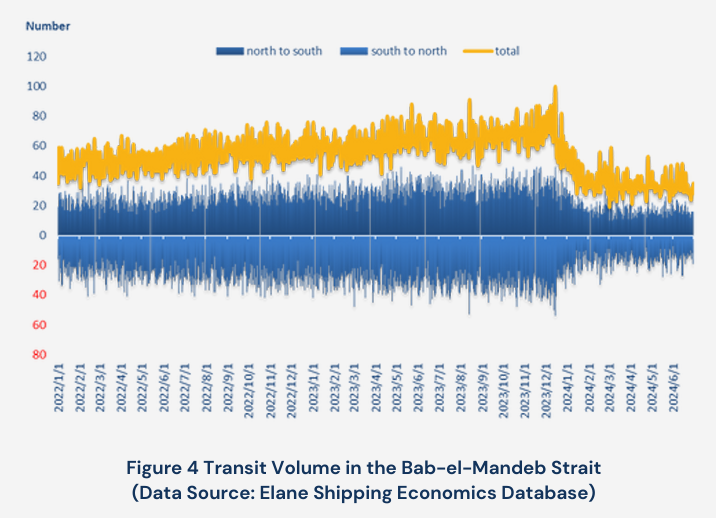
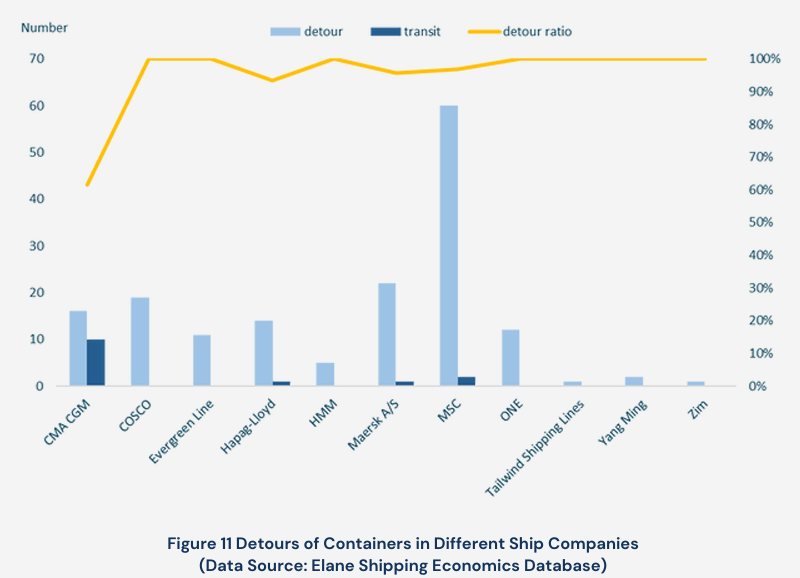
Since the outbreak of the new Israel-Palestine Conflict in October 2023, Yemen's Houthis, citing support for the Palestinians, have continuously attacked commercial ships in the Red Sea waters, leading to a large number of detours for container liners and disruptions in the global supply chain. In the first half of 2024, the capacity via the Red Sea's Bab-el-Mandeb Strait decreased significantly, with a year-on-year decrease of 42.4%. Specifically, the capacity of containers, LPG, LNG and chemical tankers decreased by a large margin, while that of dry bulk and oil transportation decreased by a relatively small margin. The crisis has led to a large number of detours for major shipping lines, with the total detour ratio remaining at around 90% and the cargo transportation turnover rate declining. Prospects for the resumption of shipping routes in the Red Sea waters are temporarily uncertain, as the situation in the Middle East is still characterized by considerable instability .
The main disruptive events faced by the shipping market in the first half of 2024 were the Red Sea Crisis and the Panama Canal Drought. As a result, the number of voyages through the Red Sea's Bab-el-Mandeb Strait and the Panama Canal decreased significantly, leading to a decline in cargo turnover and an increase in freight rates.
Panama Canal Drought
The drought in the Panama Canal has led to a sharp drop in traffic in the first half of the year. Official statistics show that as of April, the number of ships passing through the Panama Canal fell to 739 from 1,026 last year, with only 692 ships recorded in February.
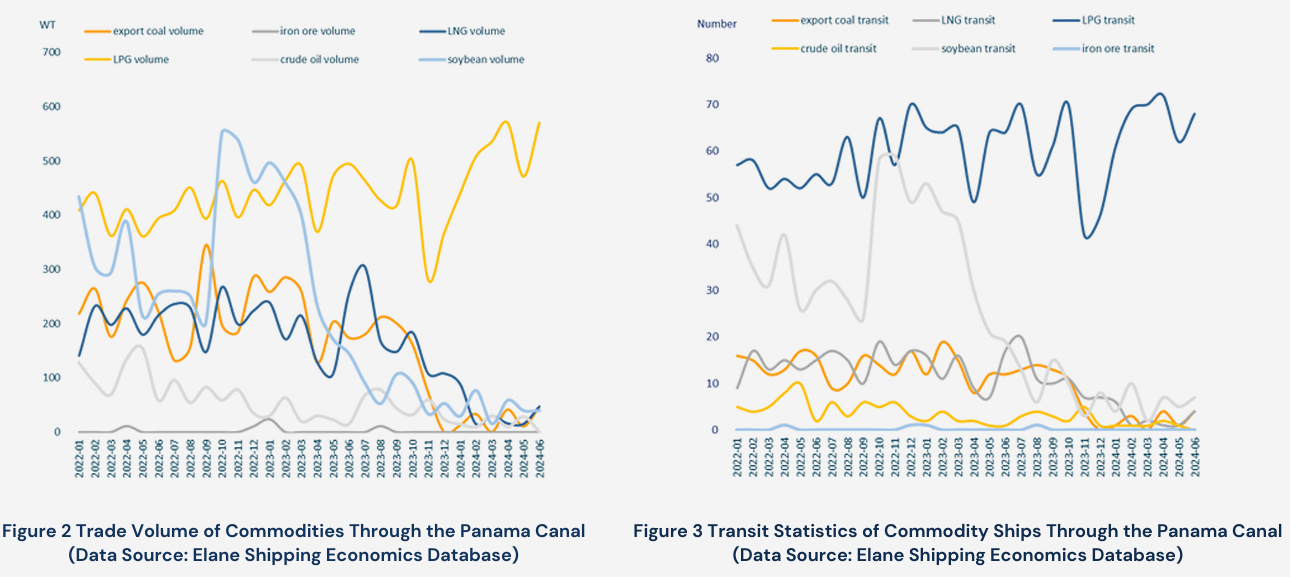
Taking commodities as an example, in December 2023, after the Panama Canal area entered the dry season, the number of ships of bulk commodities passing through the Panama Canal decreased significantly. In the first half of 2024, the average value of monthly trade volume decreased by 47.5%, to 633.53 WT from 1207.35 WT during the same period of the previous year, and the average number of monthly ship transits decreased to 78.5 from 125.5 during the same period of the previous year, marking a decline of 37.5%.
Red Sea Crisis
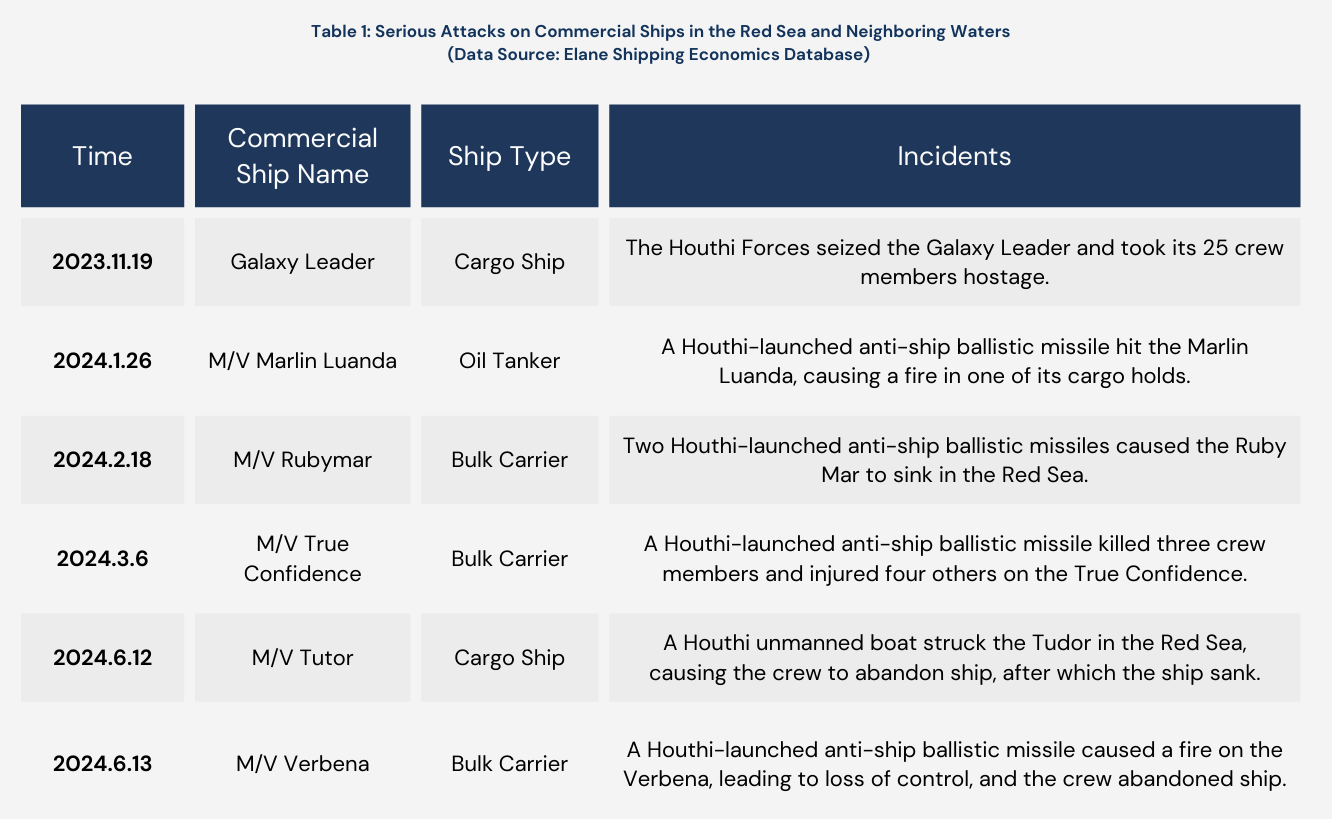
Since the outbreak of the new Israel-Palestine Conflict in October 2023, Yemen's Houthis, citing support for the Palestinians, have continuously attacked "Israeli-affiliated" ships in the Red Sea waters, leading to a reduction in the volume of traffic through the Bab-al-Mandeb Strait, a large number of detours for container liners, and disruptions in the global supply chain. Serious attacks on commercial ships in the Red Sea and neighboring waters since the outbreak of the crisis are listed in Table 1 below.
In the first half of 2024, the capacity via the Red Sea's Bab-el-Mandeb Strait decreased significantly with a year-on-year decrease of 42.4% from transit statistics of 11241 during the same period last year to that of 6477.
Specifically, the capacity of containers, LPG, LNG and chemical tankers decreased by a large margin, while that of dry bulk and oil transportation decreased by a relatively small margin. The number of container ships and LPG ships has dropped from 3,070 and 348, respectively, in the same period last year to 983 and 76, representing year-on-year declines of 68.0% and 78.2%. LNG and chemical tanker transits through the Bab-el-Mandeb Strait almost ceased in mid January, with only two ships passing through by the end of first half in 2024. In contrast, during the first half of last year, the average passage was 403 for LNG tankers and 1,159 for chemical tankers.
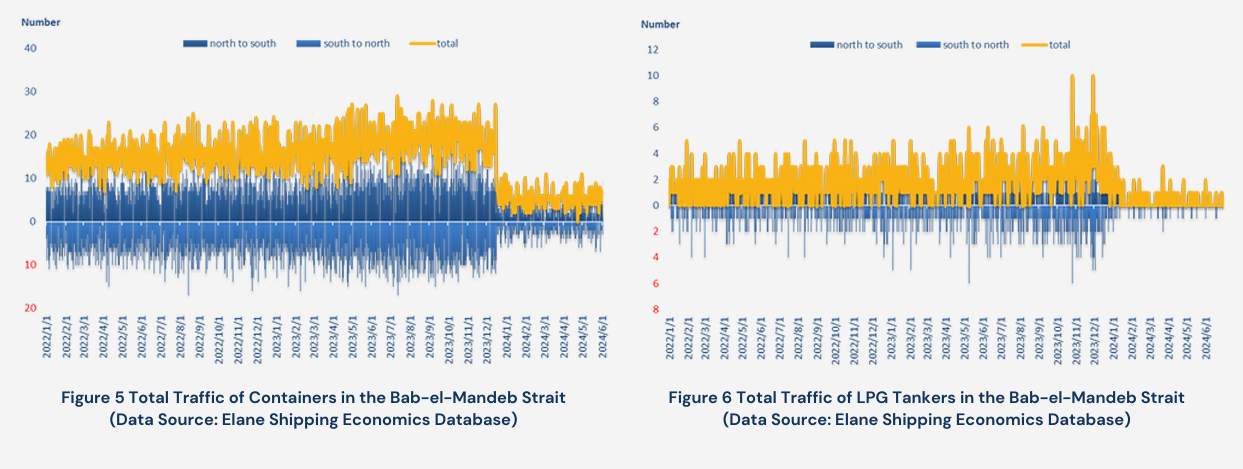
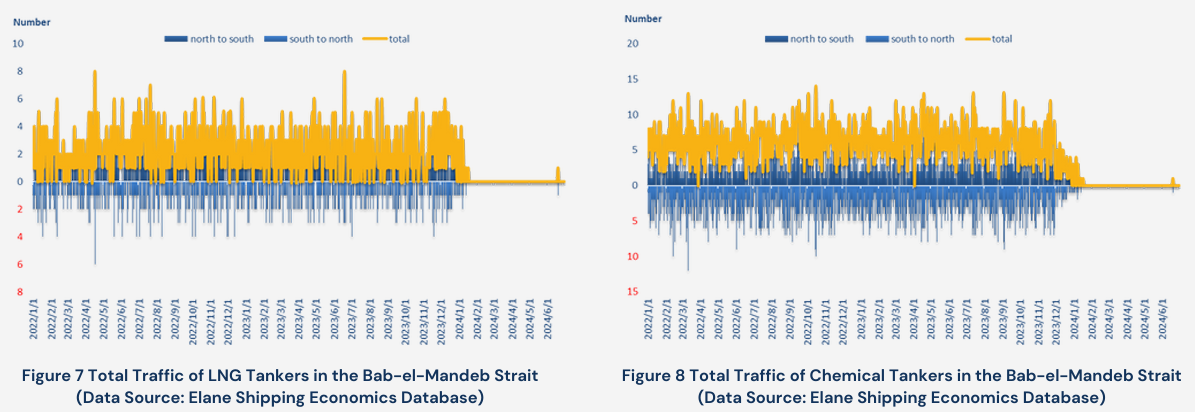
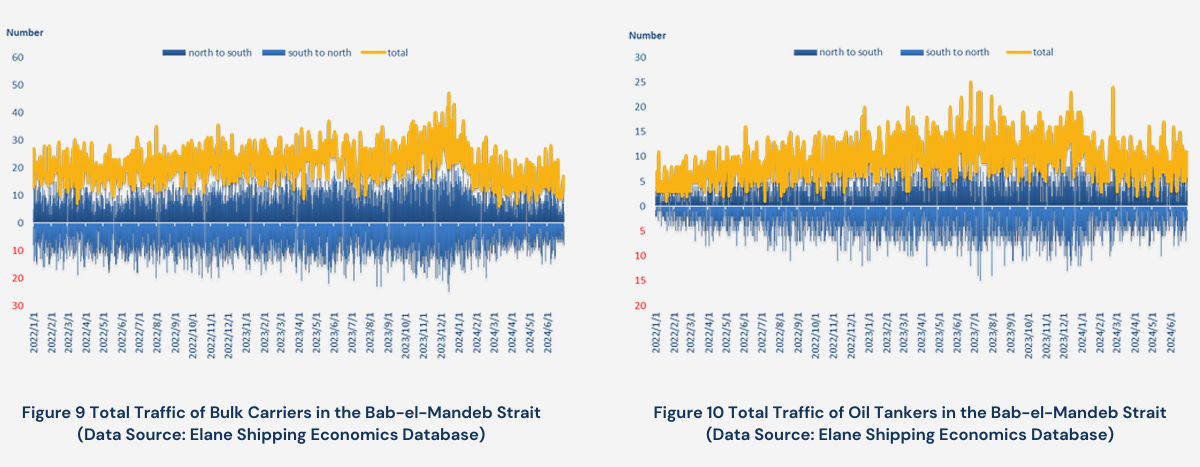
The crisis has led to a large number of detours by major shipping lines, with the total detour ratio remaining at around 90% and the cargo transportation turnover rate declining. The number of CMA CGM container ships passing through the Red Sea remained relatively stable, indicating a relatively minor impact. In comparison, shipping companies like MSC and Maersk experienced greater changes, reflecting a more significant impact.
Trends in Container Freight Rates
As a vital route for global trade, the Panama Canal Drought and the Red Sea Crisis have collectively affected the supply chain, pushing international freight rates higher. The SCFI (Shanghai Containerized Freight Index) has shown a significant upward trend, with the lowest value in the first half of the year being 1,730.98 and the highest reaching 3,714.32, marking a 22-month high. The price trends of major routes generally align with the overall SCFI trend.
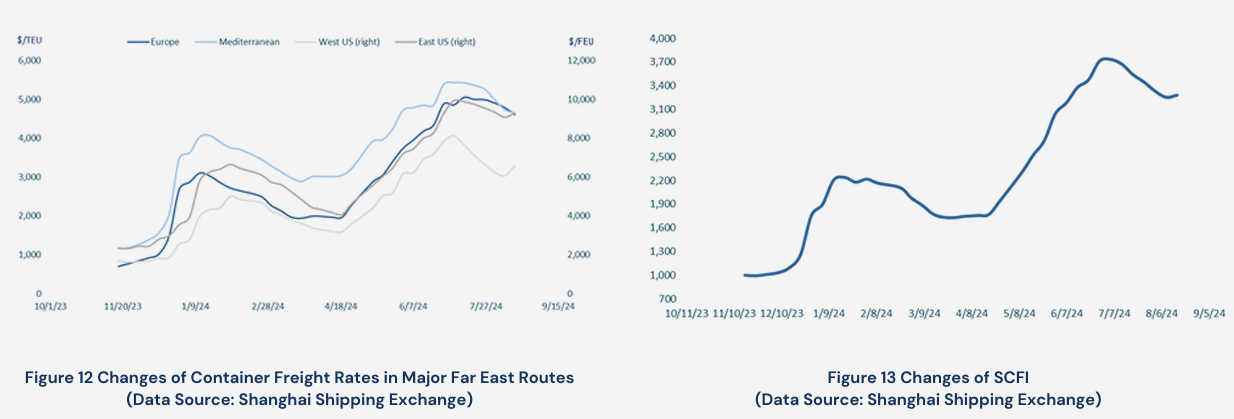
At present, the rainy season has arrived earlier in the Panama Canal area, alleviating the drought situation and restoring the canal's operations to normal. However, the prospects for the resumption of shipping routes in the Red Sea waters during the second-half of 2024 are temporarily uncertain, as the situation in the Middle East is still characterized by considerable instability.
As an independent third party, we track and record in real-time the circulation of every port, every ship, every cargo of crude oil, natural gas, coal, iron ore, grain, and containers globally. This data provides reliable evidence and innovative perspectives for the operational and investment decisions of industry-leading enterprises, ultimately forming a competitive advantage.