




1. Background Overview
Amid escalating geopolitical conflicts, some leading sanction-imposing nations have intensified measures against nations such as Russia, Iran, and Venezuela. These measures aim to weaken these countries' oil exports and sever their primary sources of fiscal revenue. However, driven by strong economic incentives, these oil-producing nations are striving to establish what is known as a "shadow fleet" to circumvent trade restrictions and ensure the continued shipment of oil products to major global consumer markets like India. This "shadow fleet" often operates beyond the oversight of the International Maritime Organization by altering vessel names, flags, and registries, as well as disabling or falsifying Automatic Identification System (AIS) signals to obscure their true identities and activity patterns. Such practices not only violate international maritime regulations but also pose significant risks to global shipping safety. Moreover, due to their lower operating costs, these vessels create unfair competition in the market, undermining regular shipping operations. Therefore, monitoring and analyzing the activities of these "shadow fleets" is crucial for maintaining order and safety in international shipping.
2. Research Methodology
2.1 Based on AIS Data and Ship Registry Data
To gain a deeper understanding of the dynamics of shadow fleets, this study primarily relies on Elane's proprietary Automatic Identification System (AIS) data combined with vessel registry data to identify tankers engaged in anomalous trade activities. AIS data reveal key information such as a vessel's real-time location, speed, and navigational direction, with Maritime Mobile Service Identity (MMSI) number. Vessel registry data, on the other hand, encompass fundamental details about the ship, including deadweight tonnage (DWT), age, flag state, and ownership, identified by the International Maritime Organization (IMO) number. By integrating IMO and MMSI data, this study verifies vessel identities and reconstructs their information changes and dynamic characteristics.
2.2 Static Characteristics
To estimate the potential size of shadow fleets, the study includes only vessels with a deadweight tonnage (DWT) exceeding 27,000 tons that are either operational, anchored, or under repair, which is the common international criteria. Additionally, shadow fleet vessels are typically characterized by advanced age and frequent changes in flag state and ownership. These features make them more challenging to track and regulate in international maritime operations.
2.3 Dynamic Characteristics
In terms of dynamic characteristics, shadow fleet vessels often engage in the following activities: Identity fraud to conceal their actual locations and navigation routes; anchoring or overstaying at sea for illicit cargo transfers; signal disappearance or identity alteration to evade tracking; reversing courses at sea to confuse monitoring entities; and changes in draft, which may indicate loading or unloading.
Specifically:
- AIS Spoofing
It involves using AIS signal simulators to generate fake signals, transmitting them to base stations to create deceptive ship tracks, and remotely disabling genuine AIS devices to hide movements. This practice is commonly observed among vessels transporting oil from sanctioned nations, aiming to obscure the origin of crude oil and create confusion.
- Loitering and Ship-to-Ship Transfers
Ship-to-ship transfers are frequently conducted on the high seas, especially benefiting sanctioned nations by evading regulatory scrutiny. For example, when oil tankers receive crude oil from shadow fleet vessels in high seas, AIS signals from both vessels can leave a trace. However, shadow fleet vessels often disable AIS, while compliant tankers retain AIS records, resulting in anomalies such as prolonged stays at sea or signals disappearing and reappearing.
- AIS Disappearance and Disguising
Disabling AIS signals is a common tactic among vessels to conceal their whereabouts and is one of the simplest methods for evading detection. For instance, when transporting crude oil from Iran to China, shadow fleet vessels often turn off AIS signals during the first half of the journey, reactivating them after passing through the Strait of Malacca. They also falsify documentation to make it difficult for China to verify the origin of the oil. Upon entering the South China Sea, shadow fleet vessels may further alter AIS information, changing their identities and routes, a practice referred to as disguising, which increases the difficulty of identification.
- Mid-Sea Turnarounds
In complex multi-vessel relay transport, mid-sea turnarounds are common. Vessel A, after transporting crude oil from a sanctioned nation, transfers the oil to Vessel B and returns to the oil-producing country to continue its task. Vessel B then completes the journey to the importing country. This mode of operation improves transport efficiency and flexibility while concealing the origin of crude oil.
- Changes in Draft
Draft, which measures the depth of a vessel submerged in water under different loads, is a critical indicator of a vessel’s cargo and loading status. It typically changes during cargo loading or unloading at ports. In ship-to-ship transfers, changes in draft caused by cargo transfer, particularly on the high seas or during transit, can indicate high risk trade activities and warrant close attention.
3. Fleet Composition
3.1 Number of Vessels
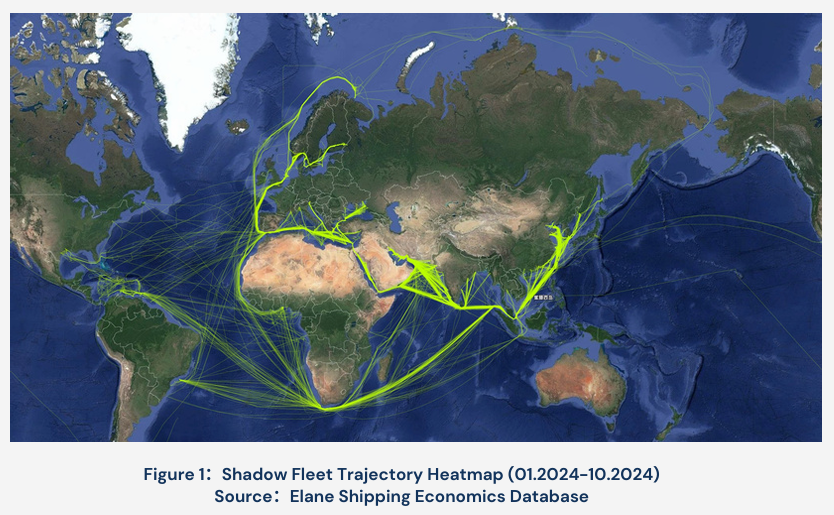
As of November 2024, the shadow fleet comprised a total of 685 vessels, comprising 10% of the global oil tanker fleet. These vessels collectively exceed 100 million deadweight tons (DWT). While varying in tonnage, flag state, and ultimate ownership, all these vessels are actively engaged in transporting crude oil to sanctioned countries.
3.2 Tonnage
Oil tankers are categorized by deadweight tonnage (DWT) into the following classes:
- Small Tankers: Vessels with a DWT below 6,000 tons, primarily used for transporting light oil.
- Medium Tankers: Vessels with a DWT ranging from 6,000 to 35,000 tons, mainly used for carrying refined oil products. Large Tankers: Vessels with a DWT between 35,000 and 160,000 tons, primarily used for crude oil transportation, occasionally for heavy oil.
- Very Large and Ultra Large Crude Carriers (VLCCs & ULCCs): Vessels with a DWT of 160,000 tons and above for VLCCs and 300,000 tons and above for ULCCs, specifically designed for crude oil transportation.
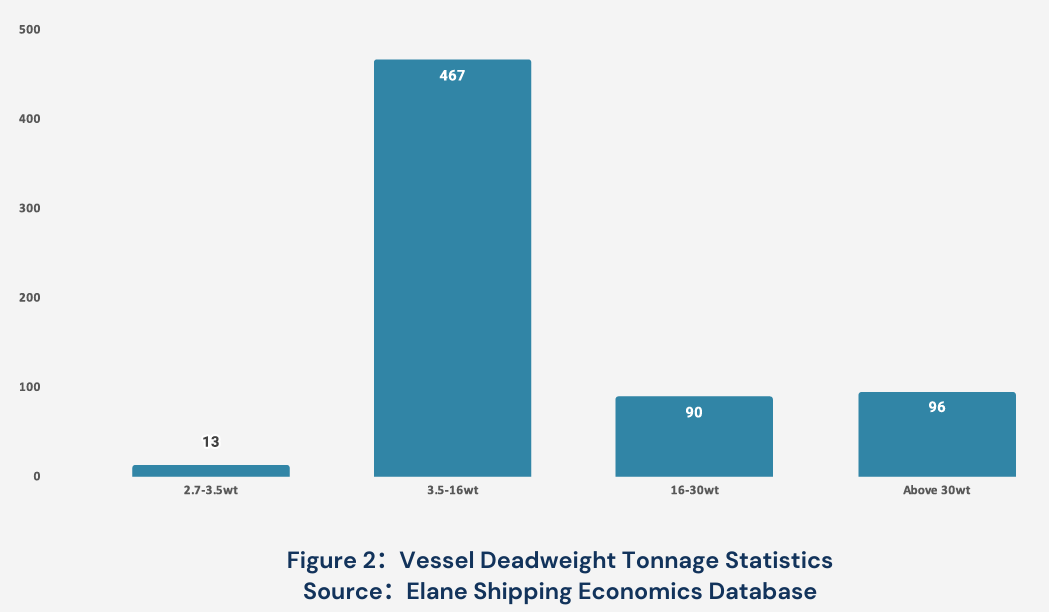
The tonnage of these vessels reflects the trade patterns of sanctioned countries in crude oil transportation. Within the shadow fleet, 98% of the vessels are large tankers or above, indicating that sanctioned countries rely heavily on crude oil transport for their petroleum trade. Additionally, 70% of the fleet consists of large tankers (35,000–160,000 DWT).
Among the shadow fleet, Aframax tankers (vessels with a DWT of 80,000–120,000 tons) represent the largest share, accounting for 33% of the total fleet. Aframax tankers are the most profitable vessel type in the Average Freight Rate Assessment (AFRA) index, offering optimal economic efficiency. Due to their high deadweight capacity and cost effectiveness, Aframax tankers have become the backbone of sanctioned countries' crude oil trade.
3.3 Vessel Age
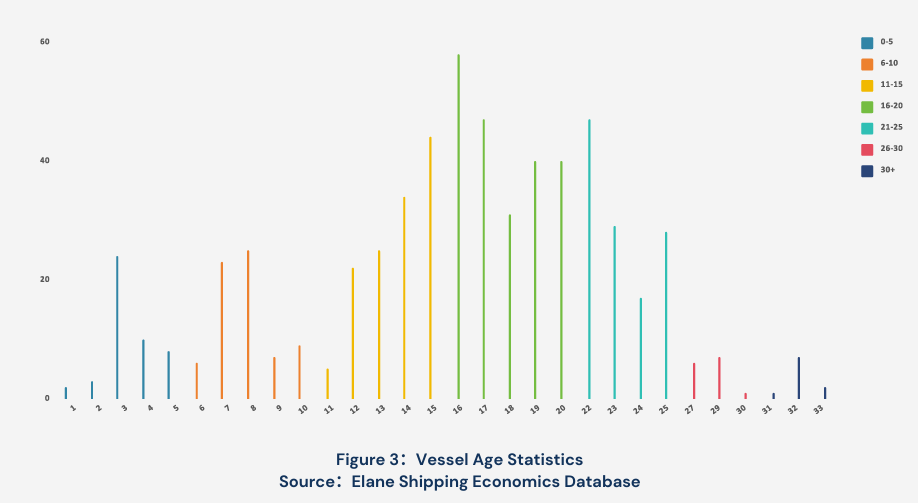
The Lloyd's List defines shadow oil tankers as vessels that are 15 years or older, with unclear ownership or corporate structures deliberately designed to obscure beneficial ownership, solely deployed for sanctioned oil trade, and engaged in one or more deceptive shipping practices outlined in the U.S. Department of State's May 2020 advisory.
Statistical data reveals that the average age of the shadow fleet vessels is 17 years, with 59.4% of the vessels classified as aged (15 years or older). Among these vessels, those built in 2009 make up the largest share, followed by ships constructed in 2004 and 2008.
3.4 Vessel Flags
The shadow fleet operates under flags from over 30 countries, with the largest shares belonging to Malta, Panama, and Liberia, accounting for 18%, 16%, and 15%, respectively. Following them are Iran and Russia, with their vessels making up 10% and 6% of the fleet. Venezuela ranks 17th, with vessels accounting for around 1% of the total.
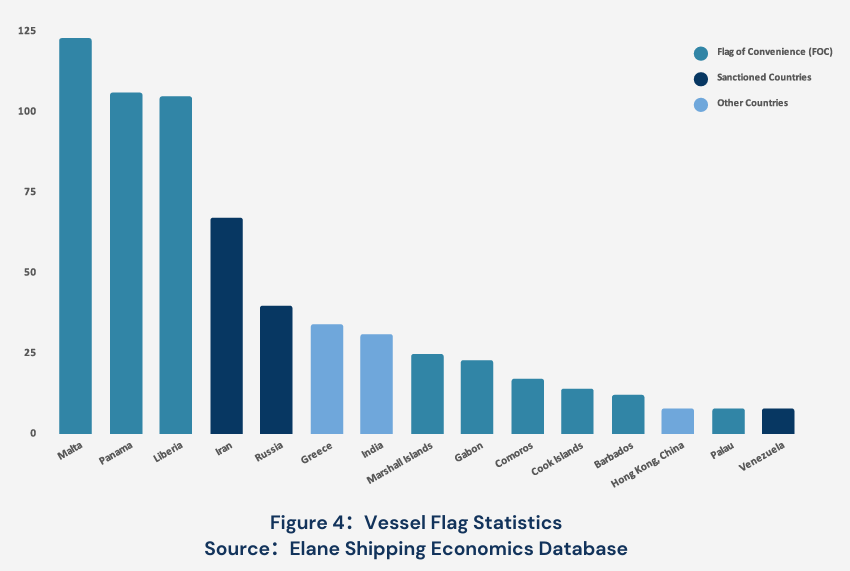
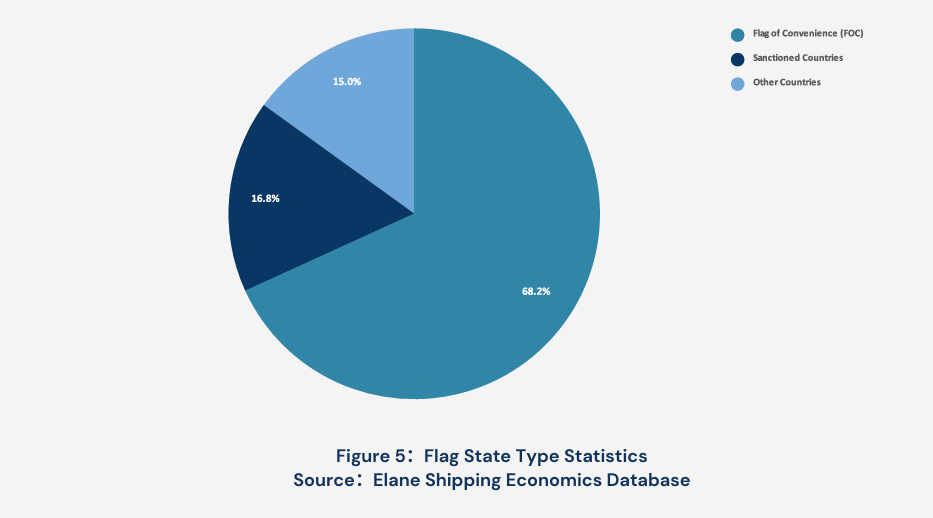
Additionally, a significant proportion of shadow fleet vessels fly flags of convenience. A Flag of Convenience (FOC) refers to countries that allow foreign ship owners to register and fly their flags, usually offering more relaxed registration requirements in order to attract foreign vessels and generate foreign exchange revenue. However, vessels flying these flags often carry higher risks due to the lack of effective jurisdiction and control from the flag state. According to the International Transport Workers' Federation (ITF), more than 68% of shadow fleet vessels are flagged under convenience flags, while only 17% are registered under the flags of sanctioned countries. This lack of effective jurisdiction exposes global shipping to increased risks, including regulatory non-compliance and safety hazards.
3.5 Ship owners
The operating structure of shadow fleets is often complex and opaque, typically involving intricate corporate structures and ownership arrangements. Some large shipping companies may control numerous vessels, but in order to circumvent international sanctions, the real operational entities of these vessels are often managed by companies registered in flag of convenience states, with frequent changes in flag states to obscure their true identities.
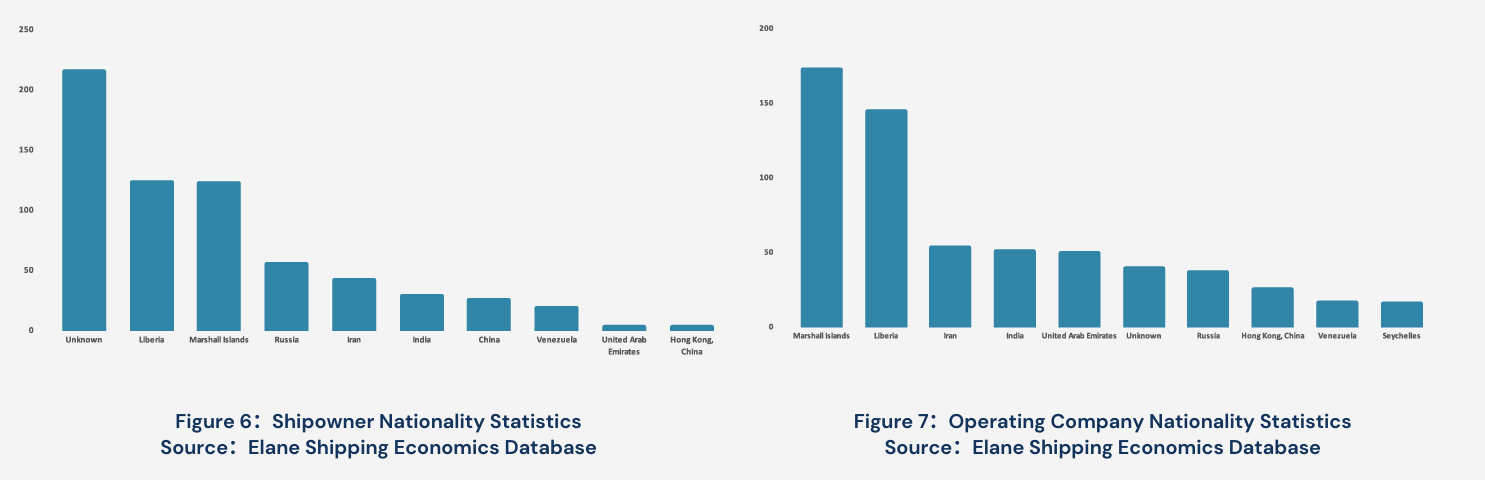
When analyzing the nationality of ship owners within the shadow fleet, it was found that 32% of the vessels have unidentified shipowners, reflecting the fleet's deliberate attempt to conceal the true ownership of its vessels. The next largest group is from Liberia and the Marshall Islands, whose shipowning companies make up a significant proportion of the fleet.
In terms of the nationality of ship-operating companies, those registered in Liberia and the Marshall Islands manage the largest number of shadow fleet vessels, controlling 25% and 21% of the fleet, respectively, significantly higher than other nationalities.
3.6 Ultimate Beneficial Owners
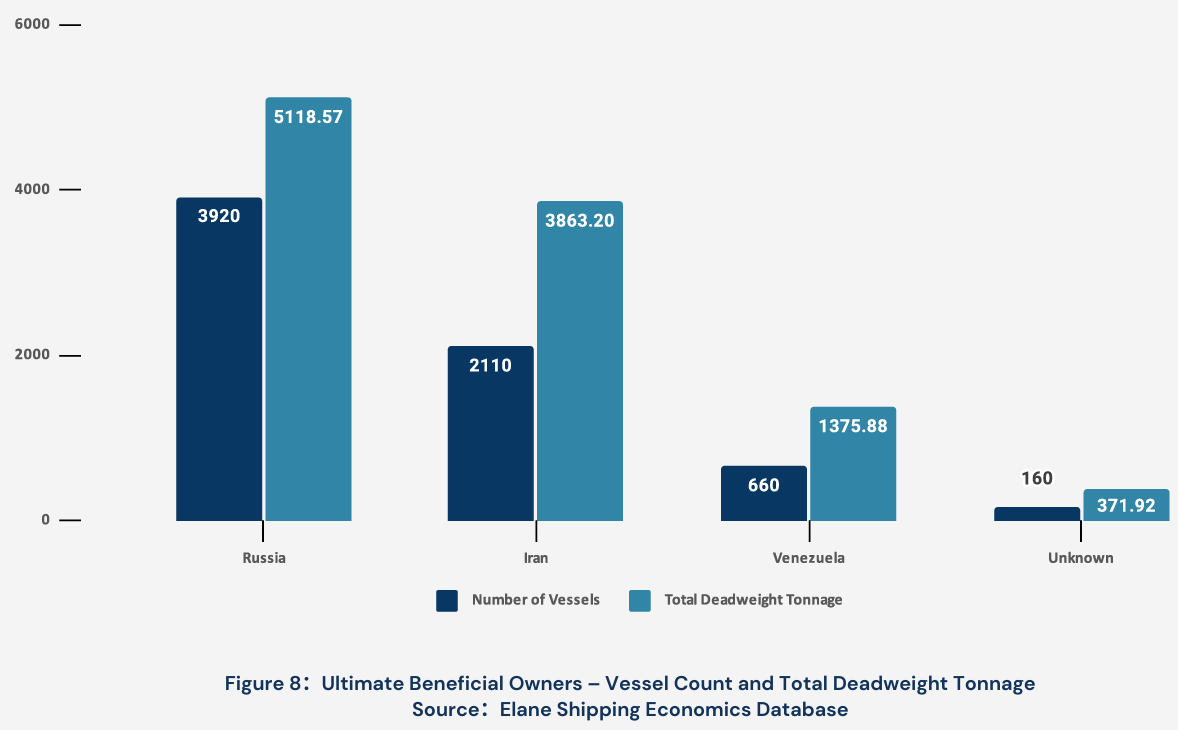
To determine the ultimate beneficial owners (UBOs) of shadow fleet vessels, multiple factors must be considered, including the vessel's flag state, shipowner, and the vessel's actual shipping activities. Currently, Russia controls the largest number of vessels in the global shadow fleet, with 392 vessels totaling 51.19 million DWT. This represents over 50% of the total shadow fleet's transportation capacity, highlighting the significant influence Russia’s shadow fleet has on global crude oil trade. Although the Iranian fleet is about half the size of the Russian fleet, it still boasts a considerable tonnage of 38.63 million DWT, with individual vessels in the Iranian fleet typically being larger than those in the Russian fleet.
3.7 Classification Societies
Classification societies are independent and impartial organizations responsible for the classification of ships and offshore facilities. Their main role is to carry out regular inspections during and after the construction of vessels, ensuring that the ships and their equipment are built and maintained according to set standards. The International Association of Classification Societies (IACS) is an international organization composed of classification societies from maritime countries around the world, and it sets more strict standards for ship classification. Vessels certified by IACS are often considered to have higher safety standards.
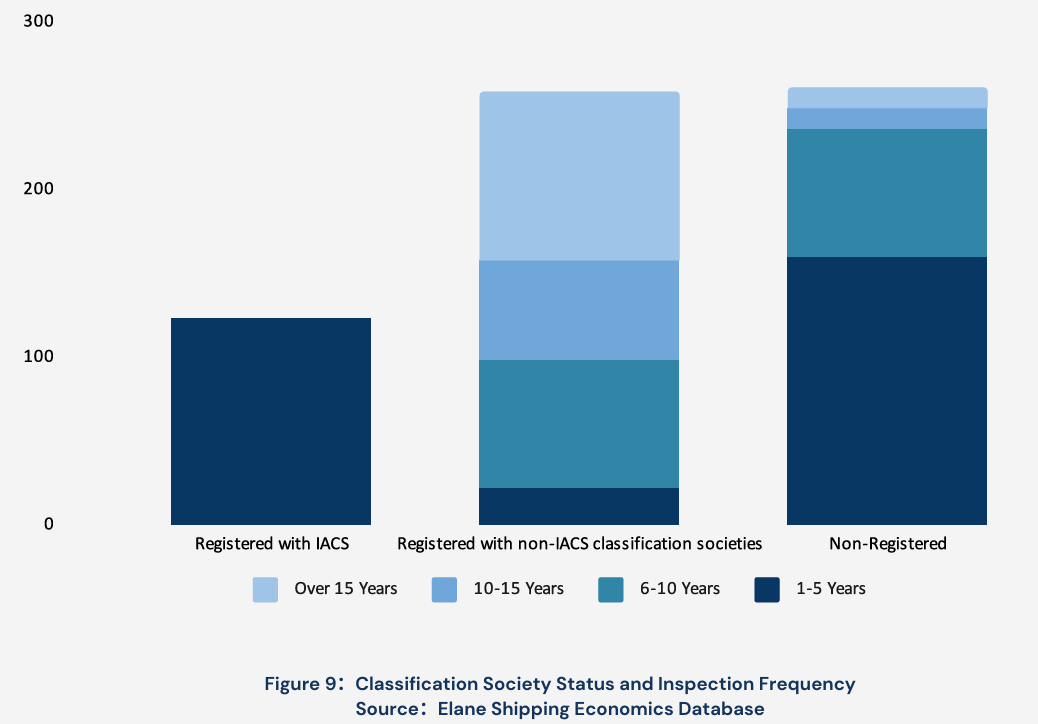
In our analysis of the global shadow fleet, we found that only 19% of vessels are registered with IACS, and these vessels are mostly 1 to 5 years old. In contrast, 40% of the vessels are registered with non-IACS classification societies, with the majority being older vessels over 15 years of age. Furthermore, 41% of the shadow fleet vessels have not been inspected by any classification society. These vessels include those that have had their certifications revoked or have expired inspections, with most being over 15 years old.
4. Typical Vessel Behavior Patterns
4.1 Signal Manipulation (Spoofing)
Signal manipulation refers to the use of AIS signal simulators to generate false AIS signals, which are transmitted fake trajcetories to receiver while remotely disabling the vessel’s actual on-board AIS transponder. This technique is often used to conceal the real movements of vessels, particularly when they are involved in oil transport for sanctioned countries. The primary aim is to obscure the true origin of oil, creating confusion about its source. This complex operation allows sanctioned countries to maintain stable crude oil exports despite international pressures and sanctions.
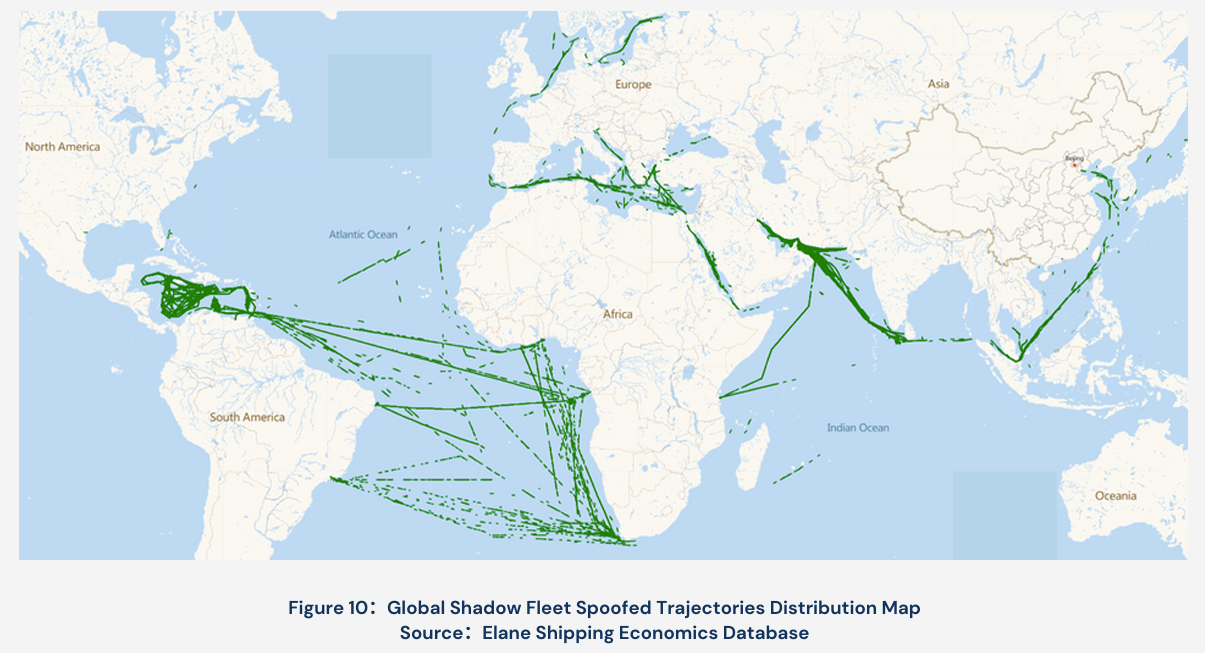
In the past year (November 2023 to October 2024), a total of 208 vessels from the shadow fleet engaged in signal spoofing activities. The locations where these incidents predominantly occurred include the Mediterranean Sea, Strait of Hormuz, Caribbean Sea, Atlantic Ocean, and Singapore. The distribution map of these spoofed trajectories is shown below.
By correlating the vessels' true operators and shipping routes, the following analysis of the actual controlling parties of these vessels was made.
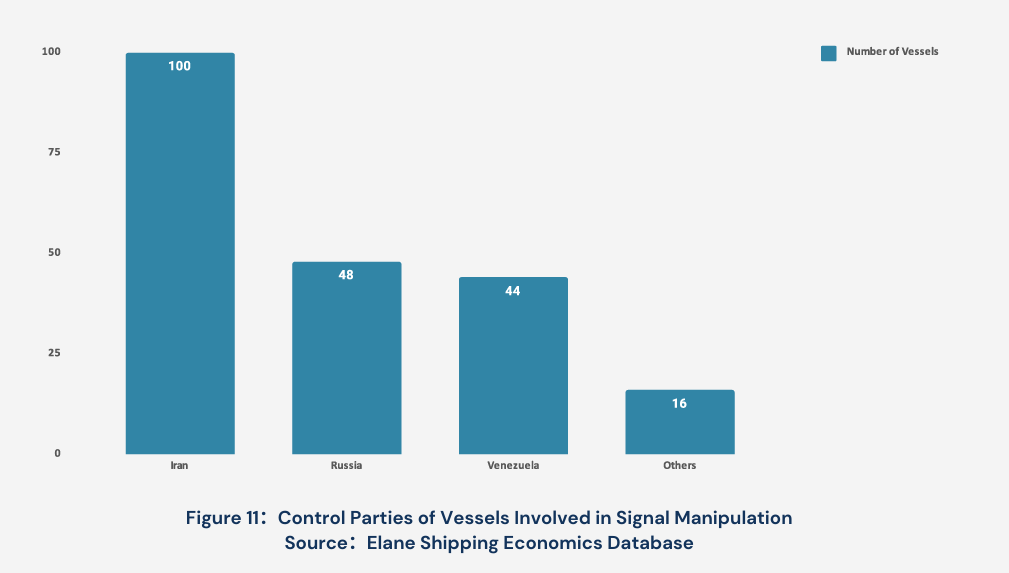
In the past year, nearly half of the vessels in Iran's shadow fleet were involved in signal spoofing. Their manipulated routes primarily spanned the Persian Gulf, Gulf of Oman, and the Strait of Hormuz. The Gulf of Oman is a key conduit for Iran's oil exports and is one of the most critical global shipping routes. Iran transports oil through this region to Asia, Europe, and Africa, maintaining its economic interests and international influence. However, due to the ongoing international sanctions, Iran has resorted to various measures to evade sanctions, including utilizing its shadow fleet for oil shipments. Numerous Iranian vessels in the Gulf of Oman engage in signal manipulation to obscure their association with Iran, thus attempting to mask the real source of oil.
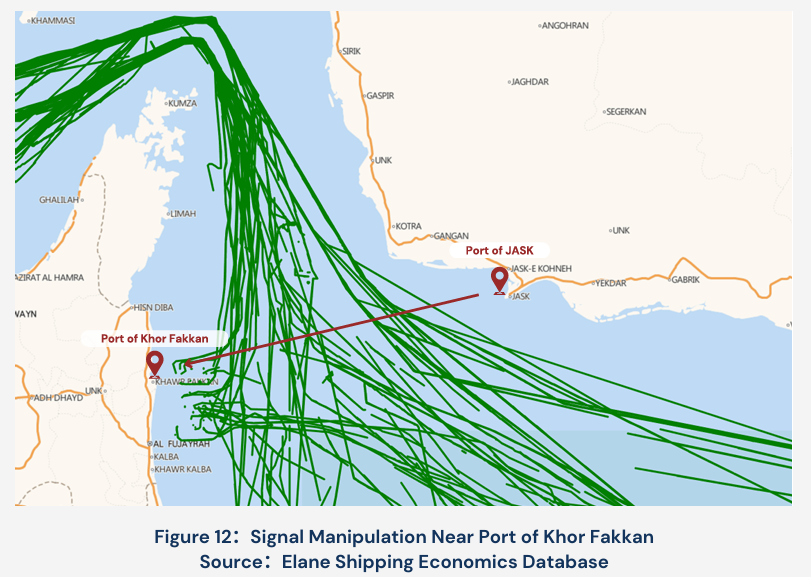
Port of Khor Fakkan, located outside the Strait of Hormuz, is also a critical node in Iran's oil transport operations. Many tankers, when docking or passing by the Port of Khor Fakkan, briefly spoof their trajectories to simulate normal movement or port calls and receive oil from Jask Port, which is less than 80 nautical miles away. The Jask Oil Terminal, located on Iran's coast along the Gulf of Oman, allows Iran to bypass the Strait of Hormuz for oil transshipment. The Strait is a hotspot for naval confrontations between the U.S. and Iran, controlling nearly a fifth of global oil exports. The establishment of Jask Oil Terminal is part of Iran's strategy to circumvent sanctions. Consequently, many of Iran's crude oil shipments use the Port of Khor Fakkan as a disguised transshipment point, evading international sanctions through signal spoofing.
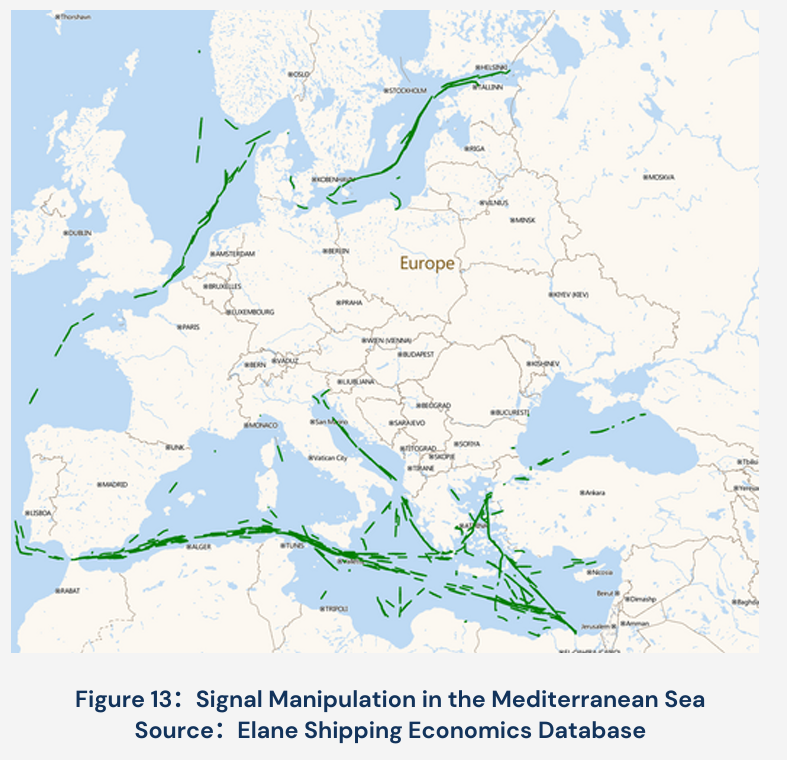
Russia's signal manipulation activities are predominantly concentrated in the Mediterranean Sea, a region with complex trade interactions involving vessels from multiple countries and frequent transshipment activities, providing an ideal cover for Russia. By frequently spoofing vessel tracks and conducting ship-to-ship (STS) transfer operations, Russia has been able to move significant amounts of crude oil from the Mediterranean toward the Atlantic Ocean and the Indian Ocean, from where the oil is then transshipped to other countries.
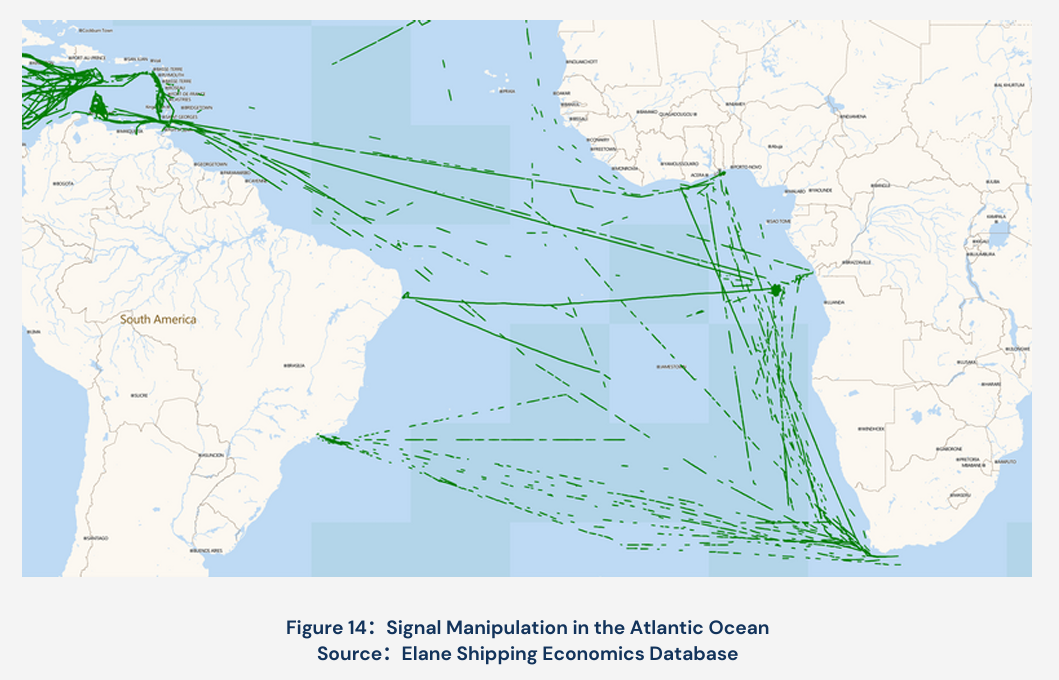
Venezuela's vessels have engaged in some of the longest and most extensive signal spoofing operations, with false tracks spanning the Atlantic Ocean. These manipulated tracks indicate vessels departing Cape of Good Hope and arriving in West African nations, such as Nigeria and Ghana. Additionally, some vessels' spoofed signals also show them traveling along the eastern coast of South America, passing through countries like Brazil. These false tracks not only span two continents but also involve multiple maritime zones.
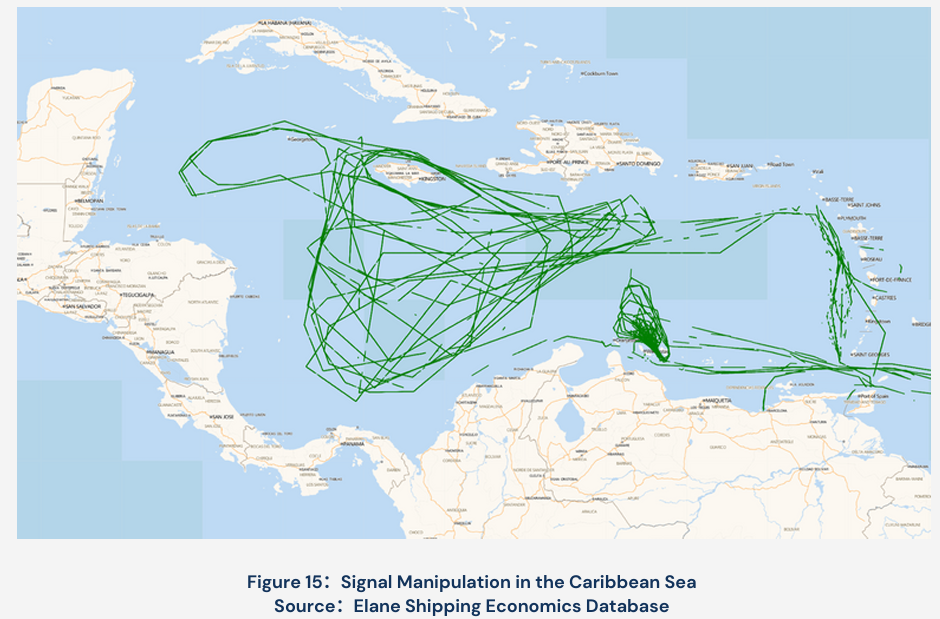
Furthermore, some Venezuelan vessels have employed more complex evasion tactics by simulating erratic, month long wandering trajectories in the Caribbean Sea, making the vessels appear to be aimlessly drifting in the open sea. This long-term spoofing tactic significantly hinders tracking and monitoring efforts, allowing these vessels to avoid detection and evade international sanctions.
4.2 Port-to-Port Transportation
Port-to-port transportation is the most direct method of shipping and provides a clear indication of the oil flow. For the shadow fleet, port-to-port transportation is commonly used to ship oil to third-party countries for transshipment, although some oil is directly delivered to the importing countries.
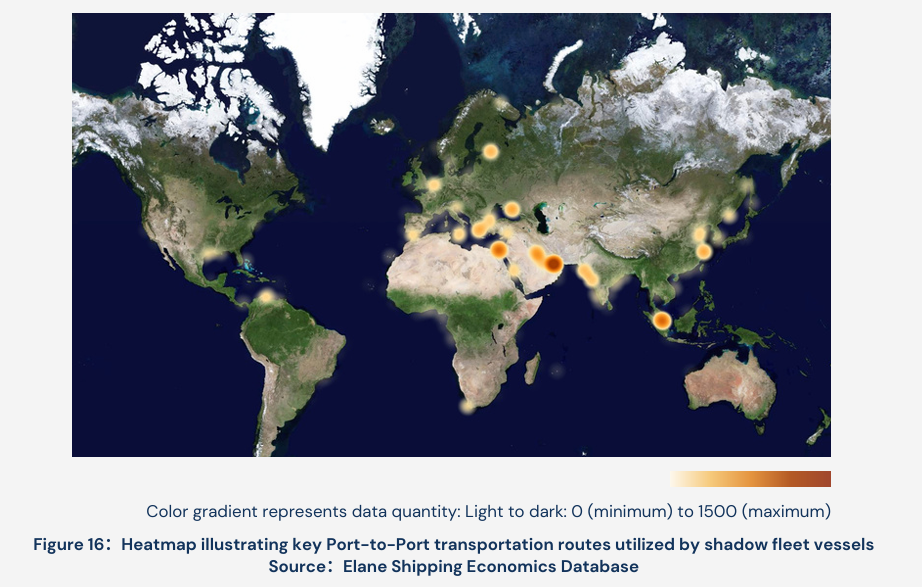
According to the heatmap of the shadow fleet's port call activities over the past year, the Strait of Hormuz is one of the busiest maritime areas for shadow fleet vessels. Additionally, the Malacca Strait and the Suez Canal show similar levels of activity, revealing key trade routes utilized by the shadow fleet. These straits are essential global oil transportation passages, with countries in these regions playing critical intermediary roles in the transshipment of oil. Sanctioned nations frequently use intermediary countries for transshipment to obscure the crude oil's origin. They often cannot directly export their crude oil to target markets, and thus rely on intermediary countries for transshipment. These intermediary countries typically have well-developed port facilities and logistics networks, enabling them to provide temporary storage and transshipment services for crude oil from sanctioned countries. This transshipment method complicates regulatory oversight. For example, when Iranian crude oil is stored in Singapore and subsequently re-exported, its original source is "laundered," making it difficult to trace the true origin of the oil.
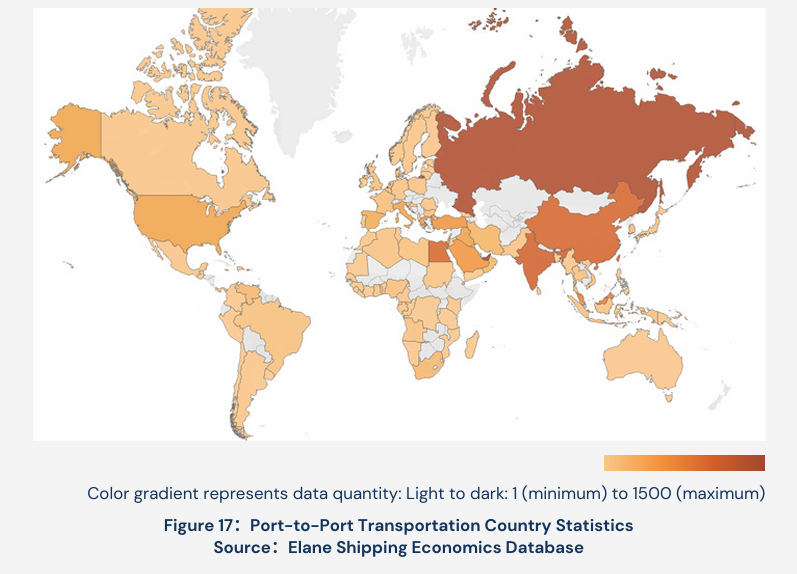
By analyzing the countries of port registry, it becomes clear that East Asia and Central Asia are the primary importers of crude oil from sanctioned countries. Russia is a major exporter through port-to-port transportation, despite Iran and Venezuela showing less activity in this domain. This does not imply lower export volumes for these nations, but rather that they tend to adopt more covert methods for port operations.
4.3 Ship-to-Ship (STS) Transfer
Ship-to-Ship (STS) transfer is another common method within shadow fleet operations, particularly on the high seas, where two or more vessels directly exchange crude oil, to evade regulatory oversight. Because STS transfer often takes place in areas with limited regulatory oversight, it presents high compliance risks. During these transfers, ownership, quantity, and quality of crude oil can change, and it could be diverted for illicit activities. Additionally, STS transfers pose environmental risks, including potential oil spills during the transfer process.
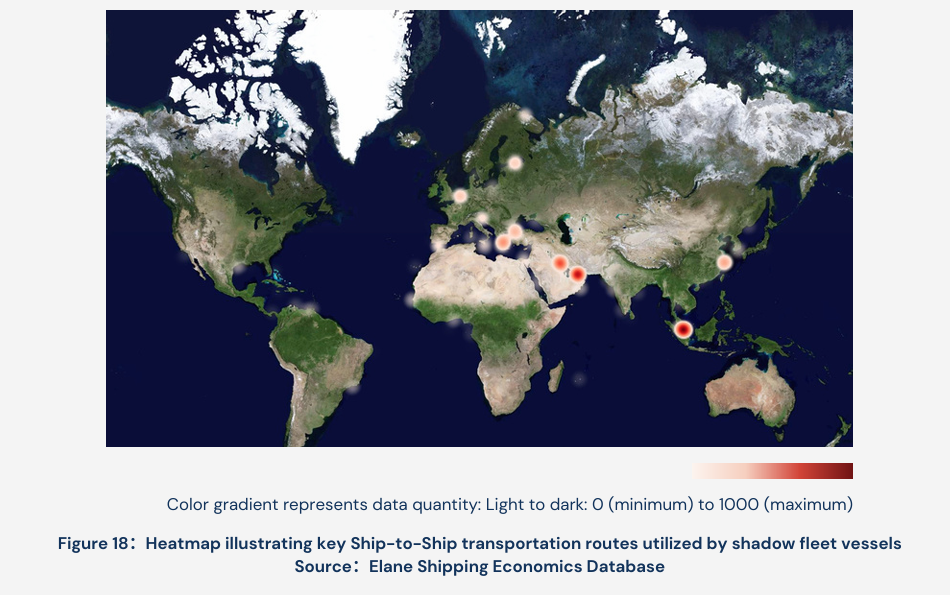
The heatmap below illustrates the most frequent areas for STS transfers, with the Persian Gulf, Strait of Hormuz, and Malacca Strait being the regions with the highest incidence of these activities.
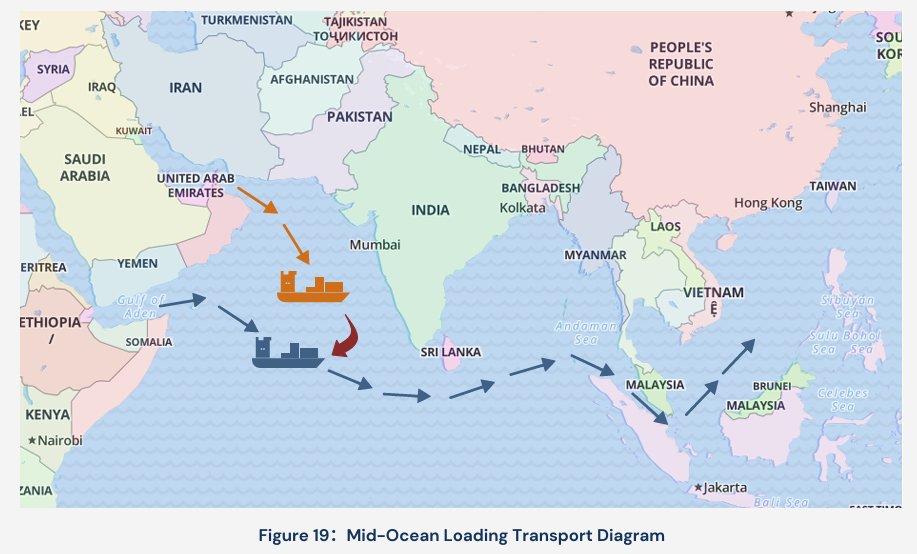
STS transfers typically occur in two main modes. The first is mid-ocean loading, where vessels en route from the exporting country to the importing country conduct an STS transfer to clandestinely receive crude oil from a sanctioned country, mixing it with legally transported crude. This method not only preserves a legitimate voyage record but also makes it significantly harder to trace the true origin of the oil due to the blending process. A key characteristic of this mode is that while the transport vessels maintain an unbroken shipping record from the export to the import country, they often exhibit suspicious behaviors during the voyage, particularly in international waters, such as signal interruptions, unusual stops, or contact with other vessels. This transfer mode is most common in the Strait of Hormuz.
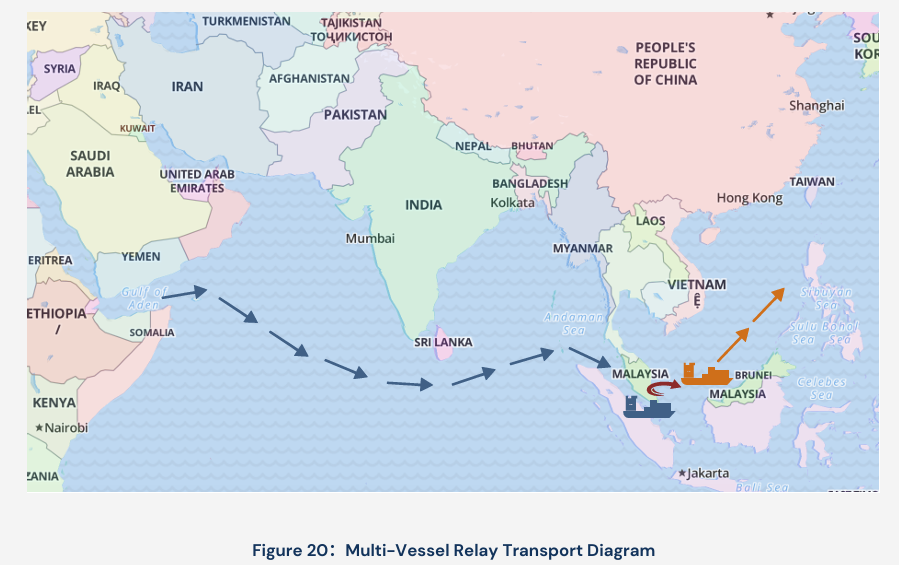
The second mode is multi-vessel relay transport, where a vessel carrying crude oil from a sanctioned country reaches a transshipment area and transfers the oil to another vessel, which then continues to transport the oil to East Asia. This mode is most frequent in the Malacca Strait. Countries such as Malaysia, Singapore, and Indonesia, although not oil producers, have become key hubs in global oil trade due to their strategic geographic locations. These nations' frequent oil transactions and transshipment operations naturally make them safe havens for shadow fleet vessels transferring oil from sanctioned countries. A distinct feature of the multi-vessel relay transport mode is that one set of vessels primarily shuttles between the sanctioned country and the transshipment country, while another set operates between the transshipment country and the importing nation, ensuring seamless oil transportation.
5. Perspectives: Trade Risks in the Global Oil Market
As the world's largest importer of crude oil, China faces a wide range of trade risks, including supply chain pressures, high transportation costs, geopolitical risks, and trade tensions, particularly between major economies. In the context of international sanctions, Sanctioned nations increasingly rely on shadow fleets to bypass trade restrictions and sustain crude oil exports. This practice not only increases the complexity and costs of global trade but also significantly raises compliance risks for both exporters and importers.
Regarding global oil markets, the ability to effectively identify and assess these risks is critical for ensuring compliance with crude oil import regulations and maintaining the integrity of international trade. In response to these challenges, countries heavily impacted by sanctions have turned to transshipment strategies, using intermediary countries with advanced port facilities to obscure the origins of oil shipments and bypass regulatory scrutiny. The involvement of shadow fleets presents substantial challenges in monitoring trade flows, verifying the origin of crude oil, and complying with evolving sanctions regimes.
One of the primary risks posed by shadow fleets is the lack of transparency in vessel ownership, difficulties in route verification, and uncertainty regarding the exact origin of the crude oil. The continued reliance on flags of convenience registries and the manipulation of AIS signals has made tracking these shipments increasingly difficult for regulatory bodies and financial institutions. This lack of oversight complicates the ability of governments and financial institutions to comply with international sanctions, particularly for markets where oil imports are critical.