




Latest Sanctions Developments
On October 9 (local time), the U.S. Department of the Treasury's Office of Foreign Assets Control (OFAC), acting under Executive Orders 13902 and 13846, added 33 vessels to its sanctions list. These include 14 liquefied petroleum gas (LPG) carriers, 10 liquid carriers, 9 oil tankers, and 2 tugboats. According to OFAC, the sanctions target Iran's LPG transportation network and form part of Washington's broader campaign of "maximum economic pressure" on Iran. As the world's largest exporter of LPG, the United States accounted for 18% of global LPG trade in 2024. Of this, 28% was exported to China, representing over half of China's total LPG imports. Apart from the U.S., China's main LPG suppliers include the UAE, Oman, and Qatar, with the top six source countries collectively making up 91.43% of China's imports. A notable portion of Iranian LPG continues to reach the Chinese market through transshipments via Indian Ocean countries. This round of sanctions specifically targets over 50 individuals, entities, and vessels allegedly involved in facilitating Iran's oil and LPG sales and transport. Among them are 16 Chinese companies and 7 associated vessels. The U.S. move aims not only to directly disrupt Iran's LPG export channels but also to reinforce its dominant position in China’s LPG import market.
Table 1: SDN List of New Sanctioned Vessels (Added on October 9)
Key Characteristics of the Sanctioned Vessels
Based on Elane Global maritime big data analysis, the vessels sanctioned in this latest round exhibit several notable operational and identity features:
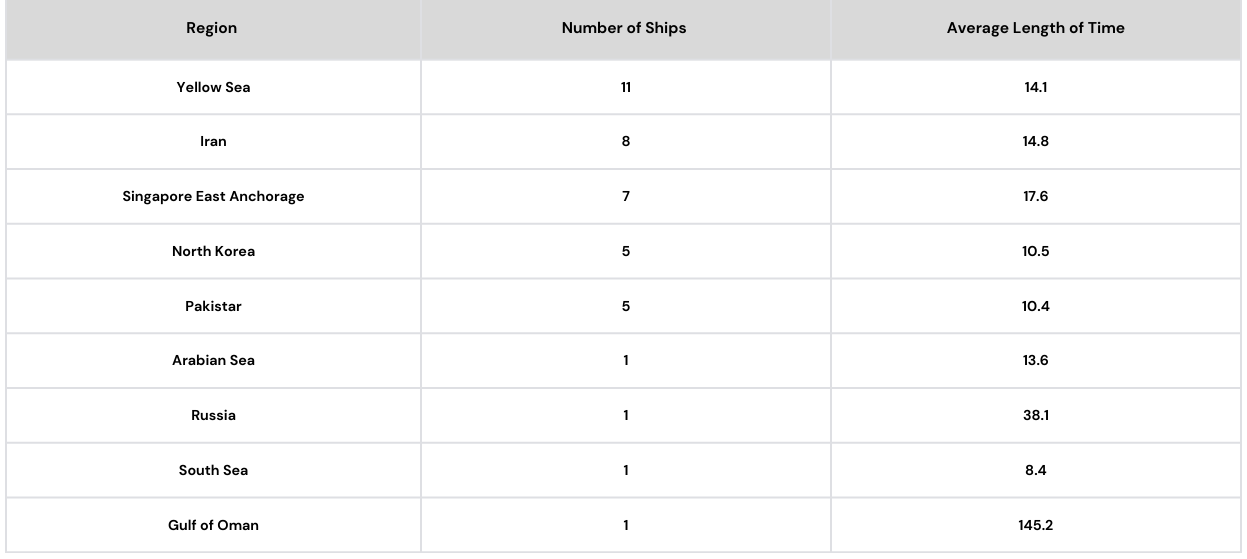
(1) Frequent AIS signal loss areas indicate a complete oil and gas transfer chain connecting Iran, intermediary transshipment zones, and China's coastal regions. The Yellow Sea has emerged as the hotspot of AIS signal disappearance among the 33 vessels listed in this round, involving Qingdao and Rizhao ports. This pattern closely mirrors the geographic distribution of Chinese entities sanctioned by OFAC since July. In response, Elane Global's FinGuard system has introduced new electronic geofences in designated areas of the Yellow Sea and South China Sea, expanding its monitoring scope beyond Iran-origin and Singapore transshipment zones to cover the "last mile" of shadow tanker approaches near China. The goal is to achieve end to-end visibility across the entire transshipment chain.
Table 2: Distribution of Signal Loss From Cargo Ships in Sensitive Areas
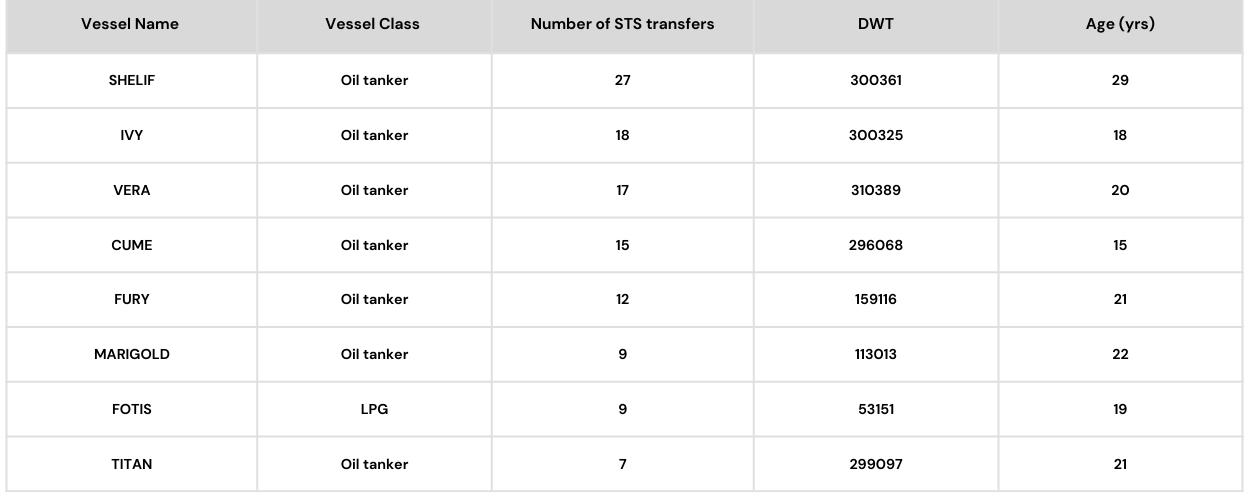
(2) Frequent ship-to-ship (STS) operations between newly sanctioned vessels and older, large-capacity ships previously under sanctions. Data indicates that the 33 newly sanctioned vessels have engaged in a significant number of STS operations in 2024. Excluding tugboats, these high-frequency STS vessels share two main characteristics: advanced vessel age and large deadweight. This indicates their active participation in high value economic transactions with Iran.
Table 3: List of Vessels Engaged in High-Frequency Docking Behavior with Newly Sanctioned Vessels
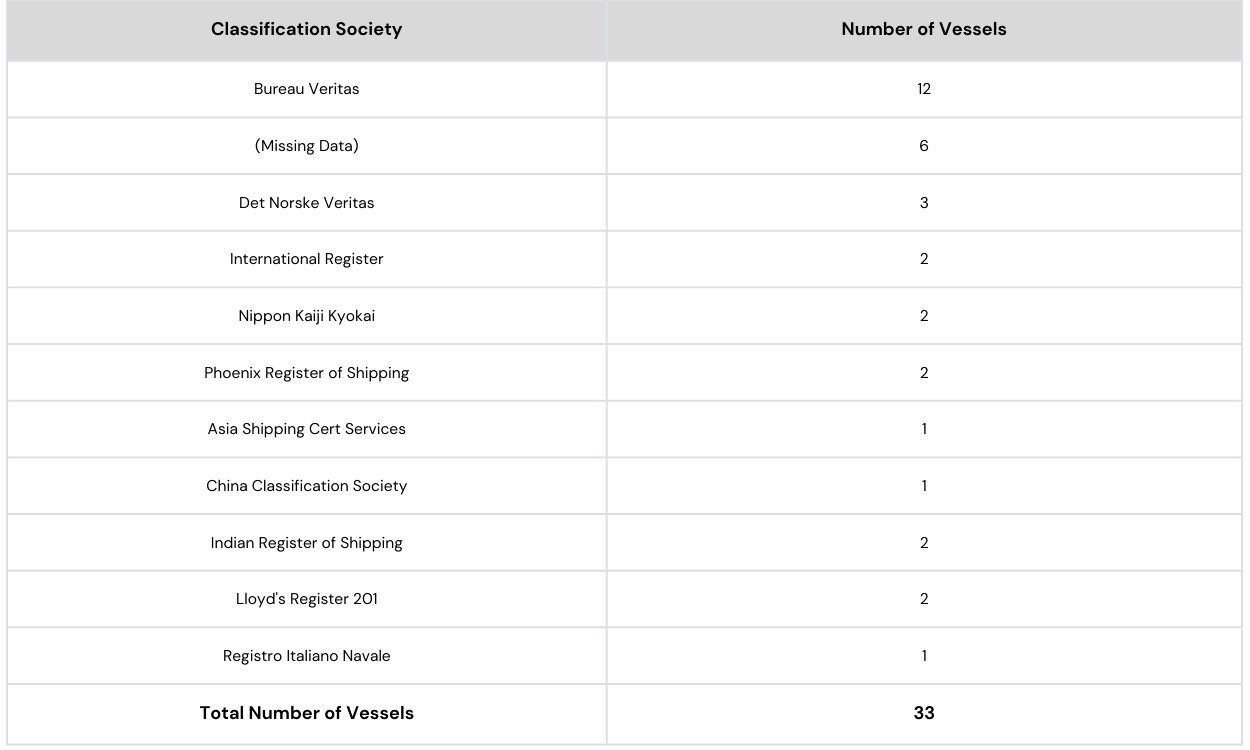
(3) Classification societies show a shift toward mainstream institutions, diluting earlier sanction-list patterns. Among the 1,321 vessels previously under sanctions, 642 (48.6%) lack classification society records— creating a major compliance blind spot. Of the recorded ones, the Russian Maritime Register of Shipping (RS) holds the largest share (around 21%), followed by the Indian Register of Shipping (IRClass) and the Korean Register (KR), while Western classification societies account for a relatively small portion. However, in this latest round, more than half of the newly sanctioned vessels are classed under major Western classification societies. This shift indicates that sanctioned vessels are increasingly penetrating mainstream maritime systems, which may prompt stricter vetting and entry requirements from leading classification societies in the near future. In the short term, it is advisable to monitor aging oil and gas carriers under major classification societies, as they may signal potential links to sanction-related activities.
Table 4: Classification Society Distribution of 33 New Vessels
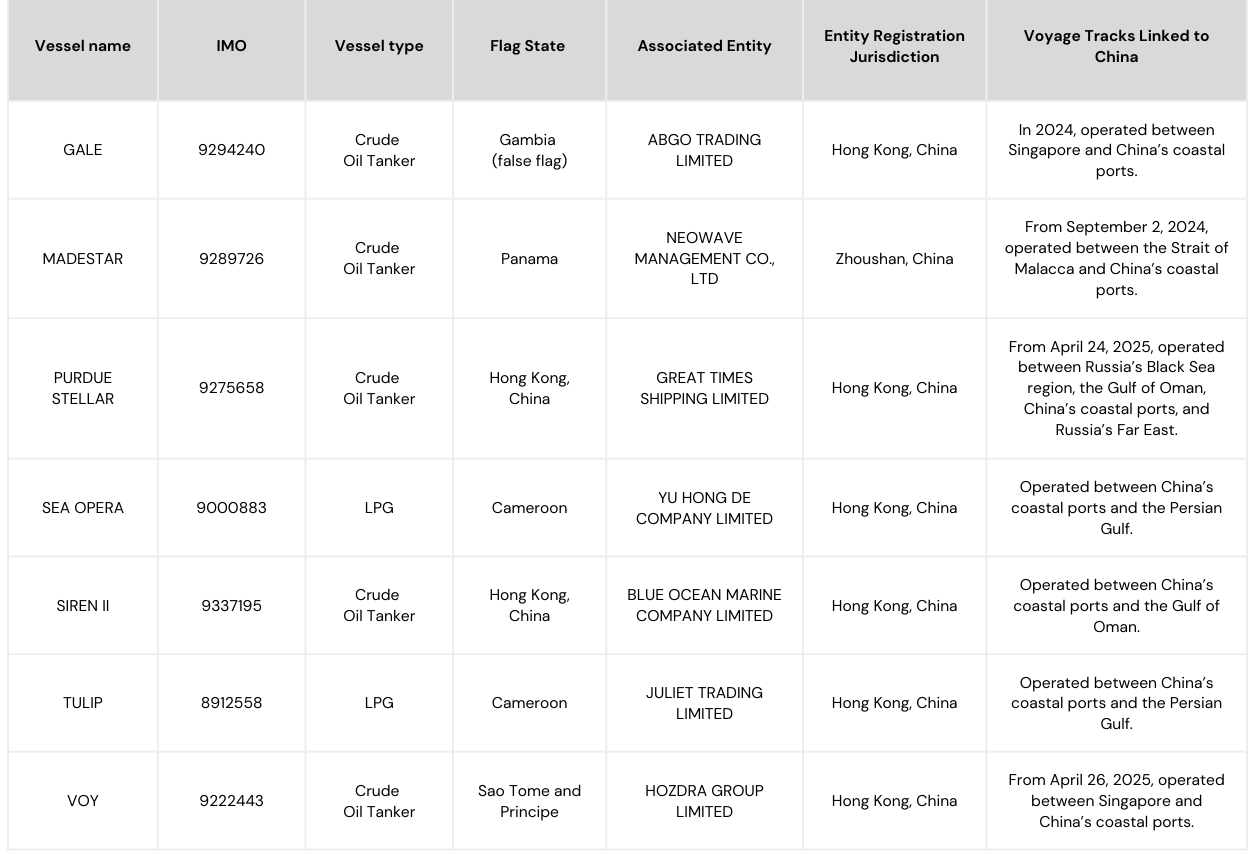
(4) Hong Kong-based "single-ship registration" structures used for risk isolation. To achieve asset and liability segregation, associated entities have adopted the single-ship company model, a common practice in the shipping industry. Under this structure, a company is incorporated in Hong Kong as the registered owner, confining any legal or financial risk to that individual vessel and shielding the broader asset portfolio of the beneficial owner. Among the seven Chinese entities connected to the sanctioned vessels, six are registered in Hong Kong, reflecting this structure. This arrangement also enhances transactional opacity, complicating ownership tracing and compliance assessments at the legal level.
Table 5: Core Characteristics of the Seven Sanctioned Vessels in this Rround
Analysis of Abnormal Behaviors and Vessel Trajectories
According to Elane Global analytical models, the seven China-linked vessels sanctioned in this round have collectively exhibited a high frequency of ship-to-ship (STS) operations in 2024. Excluding tugboat activities, these vessels conducted 181 STS engagements with oil and gas carriers.
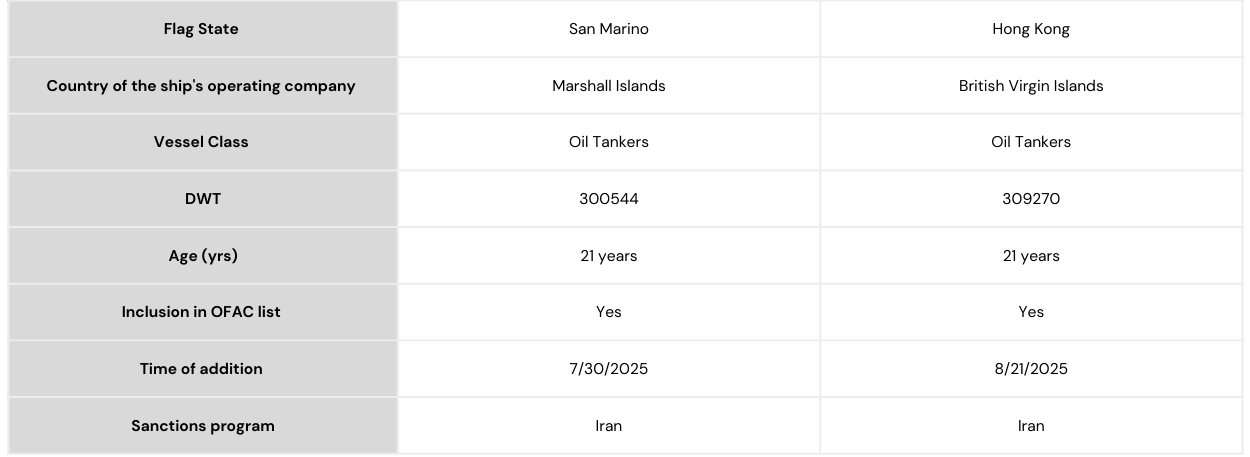
When applying additional screening criteria—deadweight over 200,000 tons and vessel age over 20 years—only two vessels remain. Cross-referencing these with the OFAC sanctions list shows that both were individually sanctioned in April and July of this year, respectively.
Table 6: List of China-linked sanctioned vessels that conducted STS operations with DWT over 200,000 tons & vessel age over 20 yrs
Further trajectory tracking and in-depth analysis of the seven China-linked vessels reveal the following key finding: On April 26, 2024, at 00:07, the vessel LILY switched off its AIS signal. Just three minutes later, at 00:10, a vessel named VOY appeared on AIS for the first time. Subsequent investigation revealed that both vessels share the same unique IMO number and are managed by Hozdra Group Ltd, one of the Chinese-linked companies listed in the current round of sanctions. Currently, only VOY remains under Hozdra Group's fleet management, while LILY has been delisted.
Given the immediate AIS signal succession, the uniqueness of the IMO number, and the common management entity, it is clear that LILY underwent a renaming and reflagging operation "identity spoofing" [1] and is now continuing operations under the name VOY. Figure 1 shows the subsequent voyage trajectory of VOY following the transition from LILY.
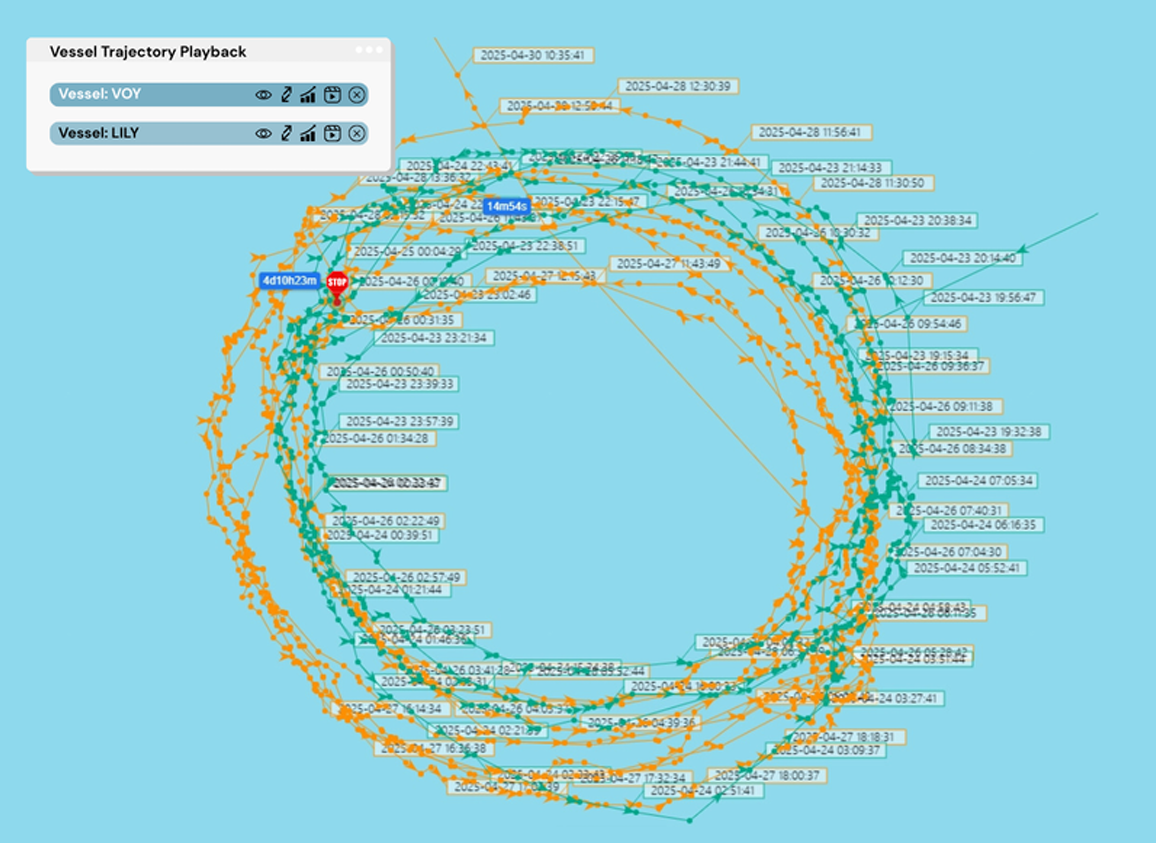
Figure 1: The vessel's voyage track formed after vessel VOY replaced LILY
Another notable case is the Panamax oil tanker PURDUE STELLAR—one of the few tankers in the current sanctions list with a DWT below 100,000. In 2024, the vessel was active along a complex trade route spanning the Russian Black Sea, Gulf of Oman, Russian Far East, and China's coastal waters. However, since early 2025, its activity range has narrowed significantly, now confined primarily to short-haul oil transport between the Persian Gulf and the Gulf of Oman.
Of particular concern, during the Iran–Israel crisis on June 21, 2025, the vessel's AIS signal was hijacked and falsified, showing its position on land at Assaluyeh Port, located on Iran's southwest coast. Assaluyeh is a key hub for Iran's naphtha and petrochemical production and exports. This signal spoofing incident indirectly corroborates that the vessel's actual commercial operations this year have been centered around Iranian-linked trade activities.
[1] "identity spoofing" refers to the practice in which a vessel switches off one AIS transponder and subsequently activates another, effectively altering its transmitted identity